Monday, 27 February 2012

Nokia 808 PureView creates a stir at MWC

It can not be overlooked. It's jaw dropping! Nokia has unveiled a new smartphone - the Nokia 808 PureView - at the MWC 2012, which has a 41 megapixel camera sensor with Carl Zeiss optics.
Yes, you read it right. It's 41 megapixel! As you might have speculated, the 41-megapixel sensor does not mean shooting pictures the size of billboards. Instead, it's about creating pictures at normal, manageable sizes.
It lets users shoot photos at different resolutions, say 2 megapixel, 3 megapixel, 5 megapixel, high resolution 8 megapixel or full resolution. The maximum resolution you can shoot at is 38 megapixels in 4:3 aspect ratio and 34 megapixels in 16:9 mode.

 The large sensor enables pixel oversampling, which is explained in detail in the white paper (embedded below). But in a nutshell, it means the combination of many pixels into one perfect pixel. In other words, the camera can use oversampling to combine up to seven pixels into one "pure" pixel, thereby eliminating the visual noise.
PureView imaging technology is touted to be the result of many years of research and development and the tangible fruits of this work are excellent image quality, lossless zoom, and superior low light performance, said the company.


The phone comes equipped with a 1/1.2" sensor, which is approximately 2.5 larger than the sensor used in the Nokia N8.

Besides, the camera performance also extends to video. The camera allows for 1080p recording at 30fps, with 4X lossless zoom thanks to the big sensor and powerful image processing which is said to be handling over 1 billion pixels per second, as claimed by the company.

The phone has a Nokia Belle operating system and a 4-inch, ClearBlack AMOLED display underneath Gorilla Glass. Powered by a 1.3GHz processor, it has 16GB of internal user memory, with support for MicroSD cards up to 32GB to contain all the pictures and video you’ll be shooting.
Reportedly, the Nokia 808 PureView will be launched in May 2012.

Saturday, 4 February 2012

Google updated Google Earth (Google Earth 6.2) - Directly from Google Blog

We're taking bird's eye view to a whole new level with the latest version of Google Earth, released today. With Google Earth 6.2, we’re bringing you the most beautiful Google Earth yet, with more seamless imagery and a new search interface. Additionally, we’ve introduced a feature that enables you to share an image from within Google Earth, so you can now simply and easily share your virtual adventures with family and friends on Google+.

A seamless globe


The Google Earth globe is made from a mosaic of satellite and aerial photographs taken on different dates and under different lighting and weather conditions. Because of this variance, views of the Earth from high altitude can sometimes appear patchy.

Today, we’re introducing a new way of rendering imagery that smoothes out this quilt of images. The end result is a beautiful new Earth-viewing experience that preserves the unique textures of the world’s most defining geographic landscapes—without the quilt effect. This change is being made on both mobile and desktop versions of Google Earth. While this change will appear on all versions of Google Earth, the 6.2 release provides the best viewing experience for this new data.


Grand Canyon before and after

Sri Lanka before and after

Share your explorations with Google+
Google Earth is a great way to virtually explore the globe, whether revisiting old haunts or checking out a future vacation spot. With the Google Earth 6.2 update, we’ve added the option to share a screenshot of your current view in Google Earth through Google+. If you’ve already upgraded to Google+, you can share images of the places you’ve virtually traveled to with your Circles, such as family, friends or your local hiking club. To try this new feature, simply sign in to your Google Account in the upper right hand corner of Google Earth and click “Share.” Images of mountains, oceans, deserts, 3D cities, your favorite pizza shop on Street View—you can now experience all these amazing places around the world with people on Google+.


Search improvements
We’ve also made some updates to the search feature in Google Earth. Aside from streamlining the visual design of the search panel, we’ve enabled the same Autocomplete feature that’s available on Google Maps. We’ve also introduced search layers, which will show all the relevant search results (not just the top ten), so now, when looking for gelato in Milano, you can see all the tasty possibilities. Finally, we’ve added biking, transit and walking directions, so if you’re itching for a change of scenery or looking for a new route for your regular commute, you can now use Google Earth to generate and visualize all your options.


Biking directions in Google Earth


Download Google Earth 6.2 and start exploring and sharing today!

IBM Offers Endpoint Manager To Manage Enterprise Mobile Phones

 
IBM has targeted organisations struggling to deal with the arrival of mobile devices into the enterprise, as part of the bring-your-own-device (BYOD) trend.

IBM rolled out an endpoint manager for mobile devices running iOS, Android, Symbian, and Windows Mobile and Windows Phone mobile platforms, the company said 31 January. Interestingly enough, IBM omitted Research In Motion’s BlackBerry platform from its mobile software.

Mobile Control

IBM Endpoint Manager for Mobile Devices helps organisations manage and secure the rapidly expanding number of mobile devices that are being brought to the corporate offices and being used to connect to company networks and access corporate data, IBM said. The software provides organisations with a single platform to secure and manage all endpoints, including smartphones, tablets, laptops, desktop PCs and servers.

“The new offering from IBM will help organisations manage personal and enterprise-owned mobile phones and tablets across IT networks in order to minimise risk, increase productivity and enhance innovation,” said Bob Sutor, vice president of IBM Mobile Platform.

Endpoint Manager extends the capabilities that IBM gained as part of its Big Fix acquisition in 2010. Big Fix software was designed to manage and secure servers, desktops, roaming laptops and point-of-sale devices. The new Endpoint Manager extends the Big Fix features to the mobile platform, according to IBM.

With Endpoint Manager, organisations can selectively wipe data from devices when lost or stolen, as well as enforce passcode policies and the use of encryption on these devices. The software can also be configured to require employees to use a VPN when accessing the enterprise network.
IT administrators will be able to install the IBM software relatively quickly and begin remotely setting policies, identifying potential data compromises and wiping data off the devices, IBM said.
Both employee-owned and personal devices can be secured by a single platform that uses a combination of email-based and agent-based management tools. IT staff will be able to identify devices that are not complying with corporate policies and take appropriate action, such as denying email access or by issuing notifications to the user device as a reminder on what remedial steps need to be performed, according to IBM.

BYOD Trend

Organisations need mobile security and management policies in place to take advantage of the BYOD trend, according to Sutor.

A number of security companies are rolling out new products to make remote wipes and endpoint management easier for mobile devices. In Cisco’s second annual “Connected World Technology Report” released last November, more than half of young professionals and college students said they’d rather lose their wallets or purses before losing their mobile devices.
McAfee just updated its Mobile Security software on 30 January with new capabilities to protect mobile devices from Web threats as well as from data leakage in case of loss or theft.
In a separate announcement, IBM acquired private company Worklight, an Israeli company that makes smartphone and tablet software. The acquisition is part of IBM’s push into the mobile space and will “advance” IBM’s portfolio by providing clients with an open platform that will speed up application delivery to multiple mobile devices. Watchlight will also securely connect smartphone and tablet applications with enterprise IT systems.

Friday, 9 December 2011

Ice Cream Sandwitch will be soon on Nexus S

Ice Cream Sandwitch will be rolling out to the Proud owners of Nexus S, hopefully within few weeks. Google has started the softlaunch of the Ice Cream Sandwitch Operating System by sending the OTA updates to the Google Employees. It is expected that the OTA will be send to the Nexus S mobile by this Christmas.


The news leaked out as the consequence of the few Google employees posting on Google+ on receiving the OTA updates as can be seen in the snap shot. And another comment boasts of the performance improvement in Nexus S with this update.

I hope you must be wondering on what will be new in your ICS? The first thing one will notice is the blueish theme of the OS. Swiping sideways will shut down an application, which will greatly help reduce the battery consumption of your phone if there's something silently updating in the background.  Face Recognition security option & changed multi-tasking pane display. To know more, read at TechRadar.

Nokia Lumia 710 Launched & ready to grab it's Market share back

Nokia Lumia 710 is to become the second smartphone from Nokia to run on Windows Phone 7.5 Mango after Lumia 800. Compared with the latter, the first one is equipped with less competitive tech specs and features. The phone was announced by the Finnish mobile maker in October 2011 along with Lumia 800, the first phone with Windows Phone from the company after its strategic deal with Microsoft early this year.

Lumia 710 is up with a 3.7-inch display and 1.4 GHz Scorpion Qualcomm Snapdragon processor. Nokia says Lumia 710 is a more colorful way to stay connected.

Nokia Lumia 710 Specs
Dimension :
Nokia Lumia 710 rocks the dimensions of 119 x 62.4 x 12.5mm and weight of 125.5 grams. When compared with Lumia 800, this phone is lighter, but has large dimensions.


OS : Windows 7.5, code named Windows Mango.

Display : 3.7-inch TFT capacitive touchscreen with 480 x 800 pixels at 252 ppi. The multitouch Gorilla glass display has sensors like accelerometer, proximity and compass. It is made with Nokia’s ClearBlack display technology.

Processor : 1.4GHz Scorpion Qualcomm MSM8255 Snapdragon processor.

RAM : 512 MB.

Memory : 8GB internal, no slot for SD memory.

Camera : 5 Mega Pixel Back Camera, No secondary camera for Video Calls.

Network Connectivity : GPRS, EDGE, 3G (HSDPA 14.4 Mbps, HSUPA 5.76 Mbps), Wi-Fi 802.11 b/g/n and Bluetooth 2.1 with EDR.

Local Connectivity : Wi-Fi, Micro USB, USB 2.0, 3.5mm AHJ Connector, Bluetooth Stereo Audio.
Operating Band : GSM 900/1800/1900, WCDMA Band I/II/VIII (2100/1900/900).

Battery : 1300MAH

The mobile is priced at US$ 350-375 in US which is very competitive price as compared to Android phones and iPhone. The design of the phones as well is very impressive and the outer cover can be changed easily with different color covers to give it new look you go out everytime.

People who are used to utilize the Video Call feature will feel disappointed as it lacks the front camera. The processor is single core processor unlike the latest mobiles coming with dual core processors but still 1.4GHz processor is pretty good enough.

People who are used of making the Internet Calls have to wait for the Applications to arrive in the Windows MarketPlace that can allow the SIP calls from their favorite SIP provider companies. But till then people can use SKYPE to make internet calls.

Google Currents Released - Directly from Google Blog

We strive to give you beautiful and simple ways to experience all the content the web has to offer, such as sharing photos on Google+, watching YouTube videos and discovering books, movies and music from Android Market. Today we’re expanding our content offering with the introduction of Google Currents, a new application for Android devices, iPads and iPhones that lets you explore online magazines and other content with the swipe of a finger.


Ready for consumers
We’ve worked with more than 150 publishing partners to offer full-length articles from more than 180 editions including CNET, AllThingsD, Forbes, Saveur, PBS, Huffington Post, Fast Company and more. Content is optimized for smartphones and tablets, allowing you to intuitively navigate between words, pictures and video on large and small screens alike, even if you’re offline.

To get started, simply download the app and choose the publications you want to subscribe to for free. You can also add RSS, video and photo feeds, public Google+ streams and Google Reader subscriptions you’re already following. In addition to consuming your favorite media, you can also use the trending tab to discover related content that matches your tastes.

Ready for publishers
Alongside Google Currents, we’re also launching a self-service platform that gives publishers the flexibility to design, brand and customize their web content. For example, if you’re a small regional news outlet, a non-profit organization without access to a mobile development team, or a national TV network with web content, you can effortlessly create hands-on digital publications for Google Currents.


Great content needs a great audience, which is why Google Currents is integrated with Google+ so users can share articles or videos they’ve enjoyed with their circles. Publishers can also associate their account with Google Analytics in order to increase their awareness of consumers’ content preferences, device use and geographic distribution.

Google Currents is now available for download in Android Market and the Apple App Store for US users. Whether you’re a reader or a publisher, we hope that Google Currents helps you easily experience the best content on the web. Try it here now and stay tuned for more to come.


Tuesday, 6 December 2011

End of Dell Streak Android Tablet


Dell has taken its 7-inch Streak Android tablet out of commission, according to its website. While some retail sites still have stock, the company no longer offers the Streak for sale from its own website and will no longer produce it. The Dell Android tablet species is officially extinct in the US.

The fadeout of the 7-inch Streak follows the disappearance of the 5-inch Streak in August, when it failed to corner (read: create) the 5-inch tablet market. The 7-inch Streak went on sale in January and was priced at $200 with a T-Mobile contract, but has failed to generate any significant interest in the last year. The only Dell tablet still in production is the 10-inch Streak, sold in China.

From here, Dell will move on to making Windows 8 tablets when the operating system launches next year. Speaking at the Dell World 2011 conference, Michael Dell, the company's CEO, said that "the Android market has not developed the expectations [Dell] would have had."

In the meantime, there are similarly priced devices like the Kindle Fire and Nook Tablet that offer many of the same features at roughly similar prices, without contracts. Dell will need to rethink its tablet game, particularly the use of contracts with mobile carriers, to stay competitive. Still, we hope to see a Windows 8 device that is more well-rounded and tablet-like than the super-e-readers above when CES rolls around in January.

Sunday, 30 October 2011

Samsung will have flexible screens in their coming phones


Samsung‘s new mobile device lineup will feature flexible screens starting in 2012, the company announced today.
In its quarterly earnings call, Samsung’s vice president of investor relations, Robert Yi, told investors, analysts and press, “The flexible display we are looking to introduce sometime in 2012, hopefully the earlier part. The application probably will start from the handset side.”
After flexible-screen mobile phones roll out, the company plans to introduce the same technology for tablets and other devices.
In January 2011, Samsung purchased Liquivista, a strategic acquisition that will allow it to produce the kinds of displays that were announced today. Liquivista made electrowetting display technology, which is used to create mobile and other consumer electronic displays that are bright, low-power, flexible and transparent.
Flexible screen technology was also a focus of Samsung’s in March, when Yongsuk Choi, director of Samsung Mobile Display, gave an overview of the company’s future mobile device plans. At that time, Choi said most of the flexible-display technology Samsung was working on was still in very early stages.
Flexible displays have been on the fringes of up-and-coming mobile technologies for some time. For example, we saw a bendable e-reader from Plastic Logic back in 2008.
More recently, Sony, in particular, has shown some interesting work in the field, demonstrating its first flexible display at CES in early 2009 and showing off advanced, thinner, more flexible displays just last year.
Still, flexible screens aren’t something we’re seeing on the mass market yet; we wonder if consumers will warm to the idea when Samsung takes the wraps off these new devices.
Samsung recently surpassed Apple as the top smartphone manufacturer, shipping 27.8 million smartphones last quarter. Altogether, Samsung’s current share of the smartphone market is 23.8 percent.

Sunday, 9 October 2011

Make a remote connection with any Computer through Google Chrome Remote Desktop Extension


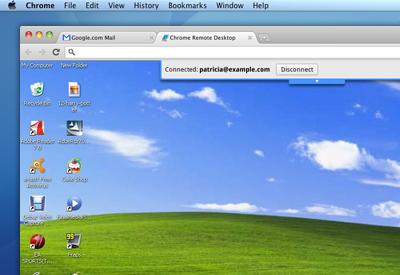
Chrome Remote Desktop BETA is the first installment on a capability allowing users to remotely access another computer through the Chrome browser or a Chromebook.

The goal of this beta release is to demonstrate the core Chrome Remoting technology and get feedback from users. This version enables users to share with or get access to another computer by providing a one-time authentication code. Access is given only to the specific person the user identifies for one time only, and the sharing session is fully secured. One potential use of this version is the remote IT helpdesk case. The helpdesk can use the Chrome Remote Desktop BETA to help another user, while conversely a user can receive help by setting up a sharing session without leaving their desk. Additional use cases such as being able to access your own computer remotely are coming soon.


Chrome Remote Desktop BETA is fully cross-platform, so you can connect any two computers that have a Chrome browser, including Windows, Linux, Mac and Chromebooks.

Friday, 7 October 2011

Sony Looking to Buy Ericsson Share in their Mobile Handsets Development Partnership

In the smartphone world, there are several players out there and many of them are banking on the popularity of Google’s Android operating system for continued success. Sony Ericsson was one of the firms that came later to the Android game.

Reuters reports that Sony is in talks to buy out the Ericsson stake in the mobile phonecompany. That would mean the smartphones would be solely under the Sony brand. Considering one of the more interesting smartphones to come out of the partnership between the two firms was the Xperia Play that is heavily focused on gaming, it's not surprising that Sony want the devices under its own brand.

Right now, Sony makes tablets, music players, and computers under its name and the only products offered under the Sony-Ericsson brand are mobile phones. According to Reuters, the negotiations with Sony and Ericsson have been ongoing for weeks. The Sony Ericsson brand is a 50:50 joint venture and the decade-long deal that started the venture must be reapproved this month.

A source close to the deal that Sony was talking buyout as of Friday. The deal could net Ericsson $1.3 billion depending on what the telecom patents Ericsson holds and uses in the smartphones are worth according to analyst Yoshiharu Izumi of J.P. Morgan in Tokyo.

Izumi said, "Up to now Sony's products and network services have all been separate. Unifying them would be positive. If they can leverage their games and other network services I think they can lift their share."

The Sony Ericsson venture has reportedly turned a profit of 90 million euros as of last year after a massive loss of 836 million euros in 2009. However, its share of the cell phonemarket has dropped from fourth place to 9th place in only a few years time.

Ice Cream Sandwich Launch Delayed - Samsung Unpacked Event Cancelled


Google and Samsung mysteriously pulled the plug Friday on the expected release of a new version of the Android operating system code named Ice Cream Sandwich (ICS).

The new release of Android is highly anticipated because it is expected to tie the smartphone version of the operating system, known as Gingerbread, and the tablet flavor, called Honeycomb.
An event billed as "Samsung Mobile Unpacked" was scheduled by Google and Samsung for next Tuesday at the CTIA show in San Diego where ICS and a new Samsung phone running it were expected to be unveiled. However, the companies have canceled the event.
“Samsung and Google decide to postpone the new product announcement at CTIA Fall," the companies said in a statement. "We agree that it is just not the right time to announce a new product. New date and venue will be shortly announced."
According to a Google spokesperson, the event was cancelled out of respect for Steve Jobs' passing.
Even with the postponement, the companies still have plenty of time to fulfill Google Executive Chairman Eric Schmidt's promise that ICS will be released in the October/November time frame.
The companies' announcement coincides with release of a video purportedly showing the new Samsung ICS phone in action. The phone, referred to by some Android watchers as the Nexus Prime or Galaxy Nexus, doesn't have any physical or capacitive buttons. Instead, they've been replaced by on-screen icons. In addition, the appearance of widgets on the device is similar to their appearance in Honeycomb.
Although Google has kept its cards close to its vest about ICS, a number of things have been reported about it.
Widgets will be richer and resizable, as they are in the tablet version of Android.
More multitasking will be added to the system and the OS will be open source.
The system will be tailored to take advantage of devices that use the Texas Instrument's OMAP chip.
As with any Android upgrade, what Android devices will be eligible for the new system will remain with the manufacturers, but two good bets for the upgraded OS are the Samsung Nexus S and the Motorola Xoom.

Samsung's new phone revelation at Samsung Unpacked Event : Samsung Galaxy Nexus

The Samsung Galaxy Nexus has apparently leaked on video, with the first live shot of the Android 4.0 Ice Cream Sandwich smartphone emerging ahead of its official launch next Tuesday. The video shows the 4.65-inch Android handset in action, according to the video uploaded by Mobilissimo, while screenshots purportedly from the Galaxy Nexus seemingly confirm that Ice Cream Sandwich will be Android 4.0.


The specifications are not still not very clear but what could be expected is a 1.2 or 1.5 GHz Texas Instruments dual core processor, 4.65-inch AMOLED curved screen (diagonally), 8 Mega Pixel Camera, 1GB RAM, 32GB of inbuilt Media storage.


All the rumors in the air will be cleared in the Samsung Unpacked event on coming Tuesday. So be patient until then.

Thursday, 6 October 2011

India Develops World's Cheapest Tablet "Aakash"


India launched what it dubbed the world's cheapest tablet computer Wednesday, to be sold to students at the subsidized price of $35 and later in shops for about $60.
Most of India's 1.2 billion people are poor and products such as Apple Inc's iPad are beyond the reach even of many in the fast-growing middle class.
"The rich have access to the digital world, the poor and ordinary have been excluded. Aakash will end that digital divide," Telecoms and Education Minister Kapil Sibal said.
The government is buying the first units of the lightweight touch-screen device, called Aakash, or "sky" in Hindi, for $50 each from a British company which is assembling the web-enabled devices in India.
A pilot run of 100,000 units will be given to students for free, with the first 500 handed out at the launch to a mixed response. It supports video conferencing, has two USB ports and a three-hour battery life but some users said it was slow.
India has a reputation for creating affordable products that are easy to use and sturdy enough to handle its rugged environment -- from Tata Motors' $2,000 Nano car to generic versions of pharmaceuticals.
Two years in development, the paperback book-sized Aakash may help the government's goal of incorporating information technology in education, although critics were doubtful of its mass appeal.
Despite being a leader in software and IT services, India trails fellow BRIC nations Brazil, Russia and China in the drive to get the masses connected to the Internet and mobile phones, a report by risk analysis firm Maplecroft said this year.
The number of Internet users grew 15-fold between 2000 and 2010 in India, according to another recent report. Still, just 8 percent of Indians have access. That compares with nearly 40 percent inChina.
The Aakash is aimed at university students for digital learning via a government platform that distributes electronic books and courses.
Testing included running video for two hours in temperatures of 48 degrees Celsius (118 degrees Fahrenheit) to mimic a northern Indian summer, said DataWind, the small London-based company that developed the tablet with the Indian Institute of Technology.
Rajat Agrawal, executive editor of gadget reviewers BGR India, said the 660 mhz processor from U.S. company Conexant Systems was "decent" for the price, but warned the machine seemed slow and the touch screen not very agile.
"Because of the price there is a lot of excitement," he said. "People might use it initially but if it is not user friendly they will give up within a week."
After first giving them out for free, the government aims to sell them to students for $35 next year. A retail version will be sold in Indian shops for about $60.
The device uses resistive LCD displays rather than a full touch screen and connects via wireless broadband. DataWind CEO Suneet Singh said future versions would include a mobile phone connection, making it more useful in rural areas.
The launch last week of Amazon's Kindle Fire shook up the global tablet market, with its $199 price tag and slick browser a serious threat to Apple's iPad.
Like the Kindle Fire, the Aakash uses the Google Android operating system.
Some of the mainly middle-class technology department students at the event said it needed refinement but was a good option for the poor.
"It could be better," said Nikant Vohra, an electrical engineering student. "If you see it from the price only, it's okay, but we have laptops and have used iPads, so we know the difference."
Some 19 million people subscribe to mobile phones every month, making India the world's fastest growing market, but most are from the wealthier segment of the population in towns.

Thursday, 11 August 2011

"The Ultimate Drive" - New Social Navigation App from BMW


"The Ultimate Drive" is a social navigation mobile app that allows users to discover the best roads to drive in more than 50 countries, and like a smartphone "American Idol" competition, lets them rank, comment and share those roads via Facebook, e-mail or GPS devices. It's sponsored by BMW Group Financial Services.
"Within a few seconds of opening the app, 'The Ultimate Drive' connects you to driving enthusiasts who have discovered great roads in your neighborhood — roads you may have overlooked," said Pawan Murthy, general manager of online business for BMW Group Financial Services.
After downloading the app, which is available for both iOS and Android devices, the app finds the user's location and then displays recommended stretches of road from other car enthusiasts. Conversely, when the user has generated his or her own favorite stretch, it takes three taps to share via e-mail or Facebook or send to a GPS device or app.
San Francisco-based software and technology firm SocialNav developed the technology that powers "The Ultimate Drive". It can be downloaded for free from Apple's App Store and the Android Marketplace.